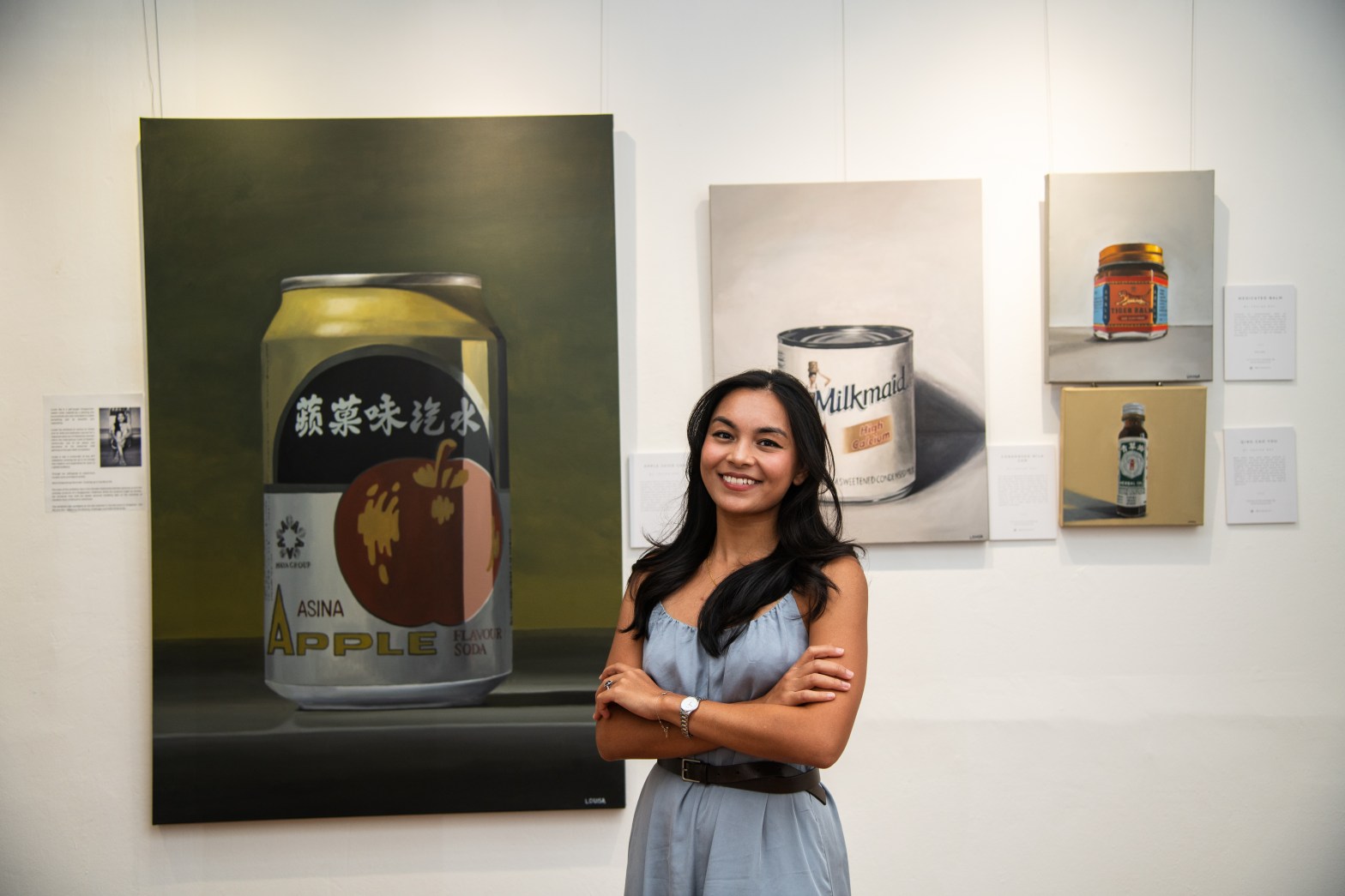
With a background in actuarial science and professional experience across finance and technology, her practice is informed by a disciplined, methodical approach. In 2025, she made a decisive shift away from corporate life to pursue art full-time.
Louisa Raj is a Singapore-based artist whose practice centres on hyperrealism and the quiet significance embedded in everyday objects. Her work is informed by values shaped by growing up in Asia, where hard work, responsibility, family, and quiet sacrifice are woven into daily life. Rather than pursuing grand narratives, she turns her attention to the familiar and often overlooked, using precision and scale to slow the viewer’s gaze and encourage closer looking.
Can you briefly introduce yourself?
I’m Louisa Raj, a Singaporean hyper-realism artist. I paint ordinary objects, things that we live with, eat with, and yet barely notice anymore.
I’m excited to share that my debut solo exhibition, Rice is Nice, opens at Wasuka Art on January 17th and runs till February 15th!
Are you a full-time artist? When did you start painting, and what first drew you to it?
Yes, I am a full-time artist now. I started painting seriously about six years ago, alongside a full-time corporate job. At the time, I saw a painting by Heart Evangelista and felt how wonderful it must be to be able to paint. It was a very simple urge. I just wanted to learn how to paint too.
I did not come from an art school background. I graduated with a degree in actuarial science, so much of my learning happened through trial and error. Observing, painting badly, receiving feedback, and then painting again.
I also took a short-term painting class at LASALLE, and later had opportunities to learn from a few very talented artists in Singapore, including Mohamad Quthubdean M F, Matthias Chua, and Dominic Thian, to strengthen my foundations. But at the end of the day, there is no shortcut. A lot of it came down to practice. I paint every day.
Over time, my practice became more consistent. I was also sharing my art process online, which helped my work reach more people. Gradually, I began receiving regular commission requests; around five a month. There were many ideas I wanted to explore and many things I wanted to paint, and I could not do that fully as a part-time artist. So when I finally decided to go full-time, it felt like a natural next step.
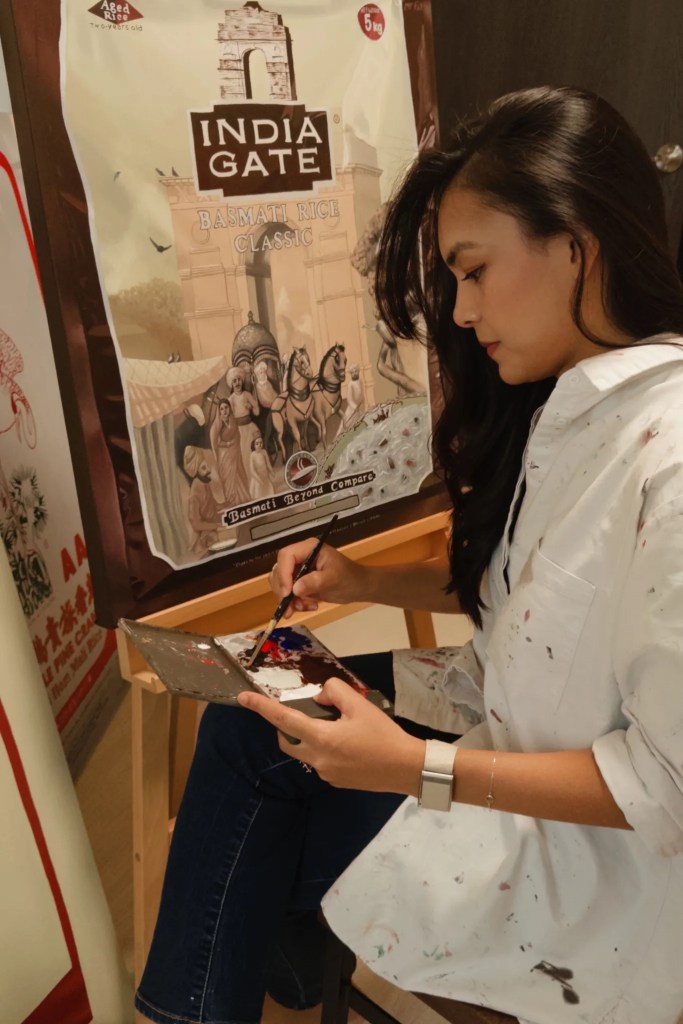
Art spans a wide range of mediums and styles. How did you decide that fine art was the right path for you?
I don’t think of fine art as one specific medium. Many different ways of making art can be fine art. I just kept painting because I liked looking closely at things. Painting gives me a way to slow down and really pay attention. Over time, I could see myself getting better at it, so it felt like the right path.
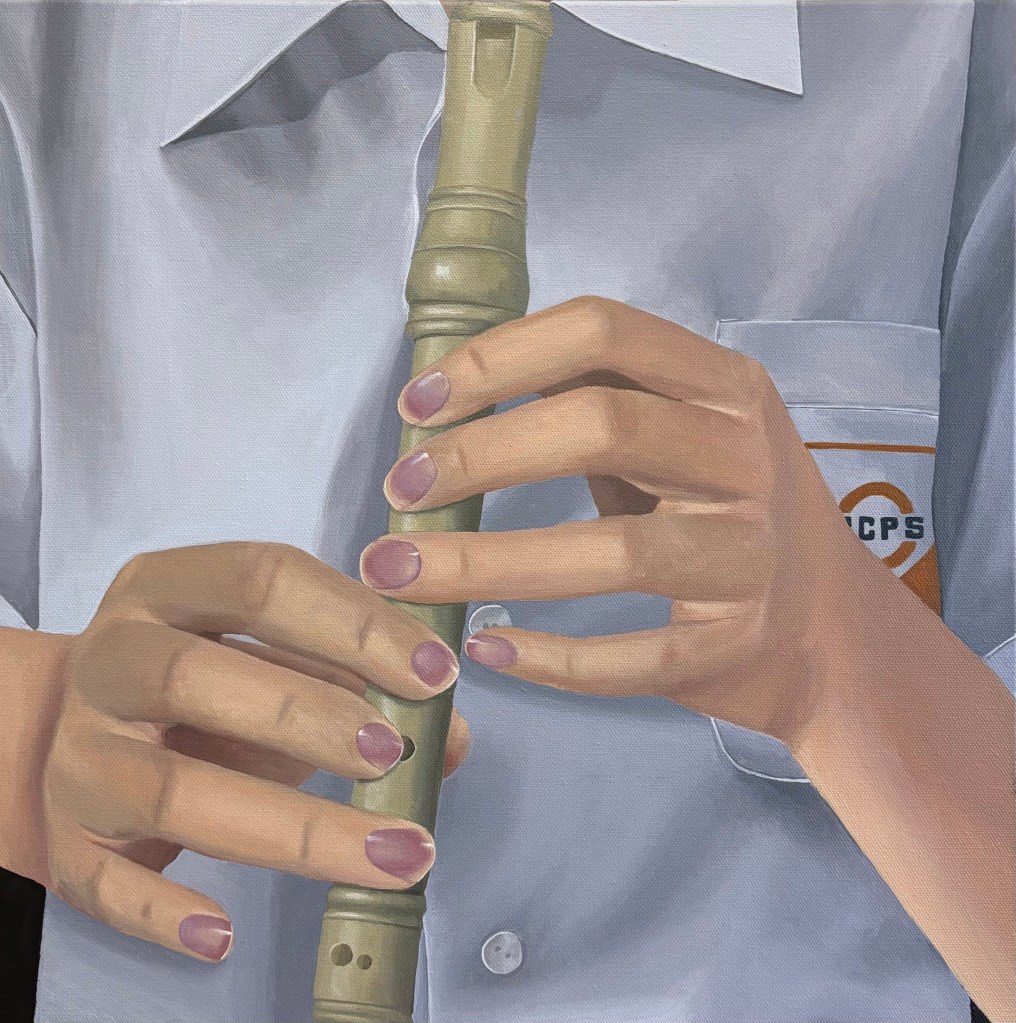
Developing a recognisable artistic identity can be challenging, especially early on. How did you arrive at using iconic Singaporean food as a central theme in your work?
I think this is a very common part of an artist’s journey. In the beginning, you are mostly learning. You study other artists and practise techniques, you don’t really know what your identity is yet. That was the case for me too.
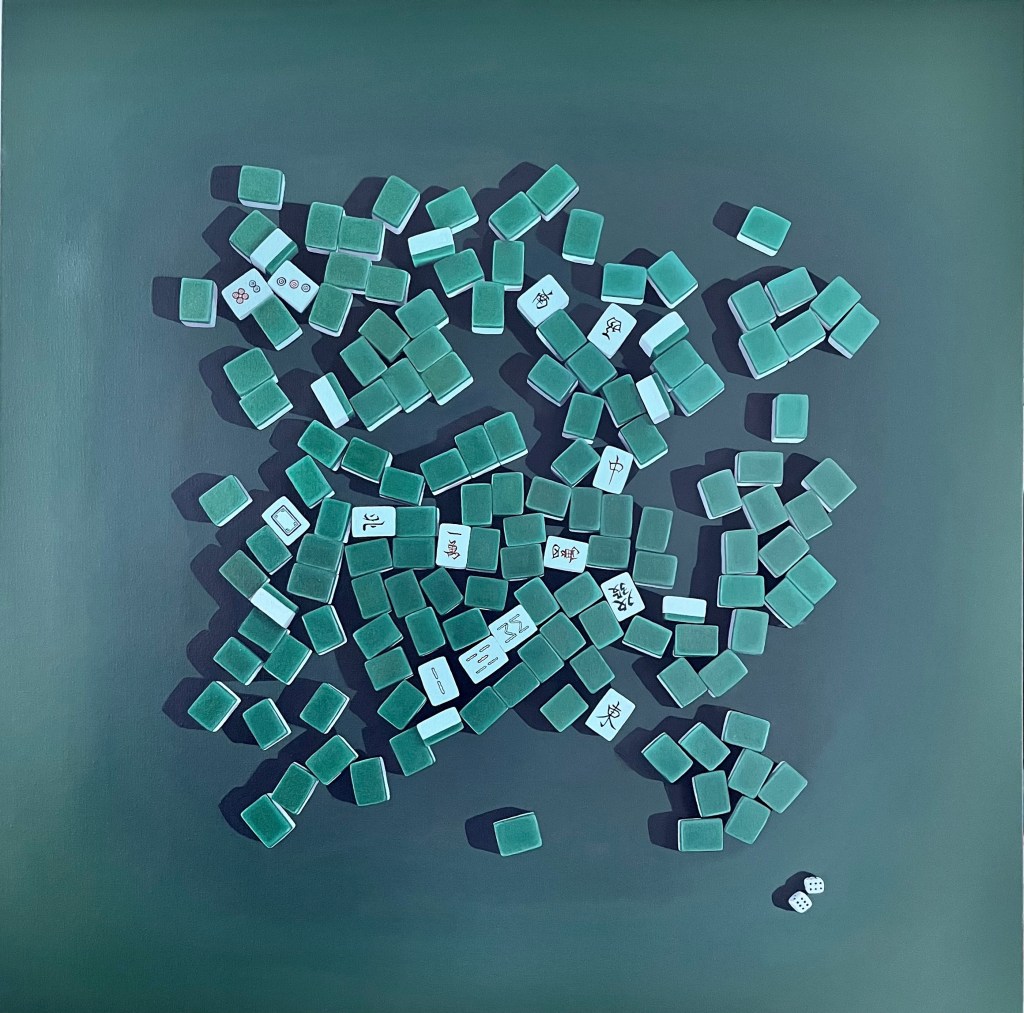
In one of my first exhibitions, I showed a painting of a vintage Barbie. During that show, I met a major Barbie collector who works in branding and marketing. He shared an observation with me. While nostalgia is something many local artists have explored, he felt that nostalgia from the 1990s and early 2000s, the period I grew up in, was less explored. He suggested I look at it through my own growing-up experience.
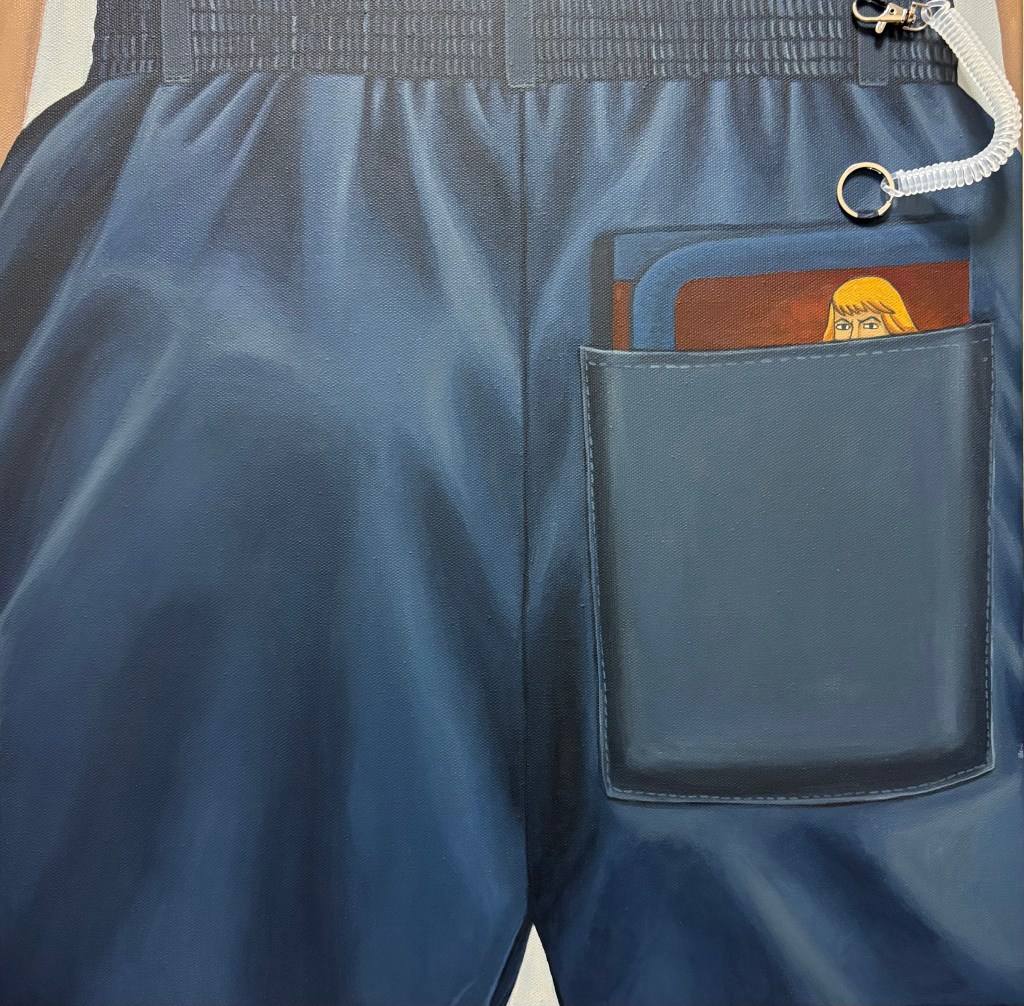
That helped me realise I was naturally drawn to the beauty of everyday objects. From there, I began painting things that were familiar to me and part of my daily life, yet so ordinary that I stop noticing.
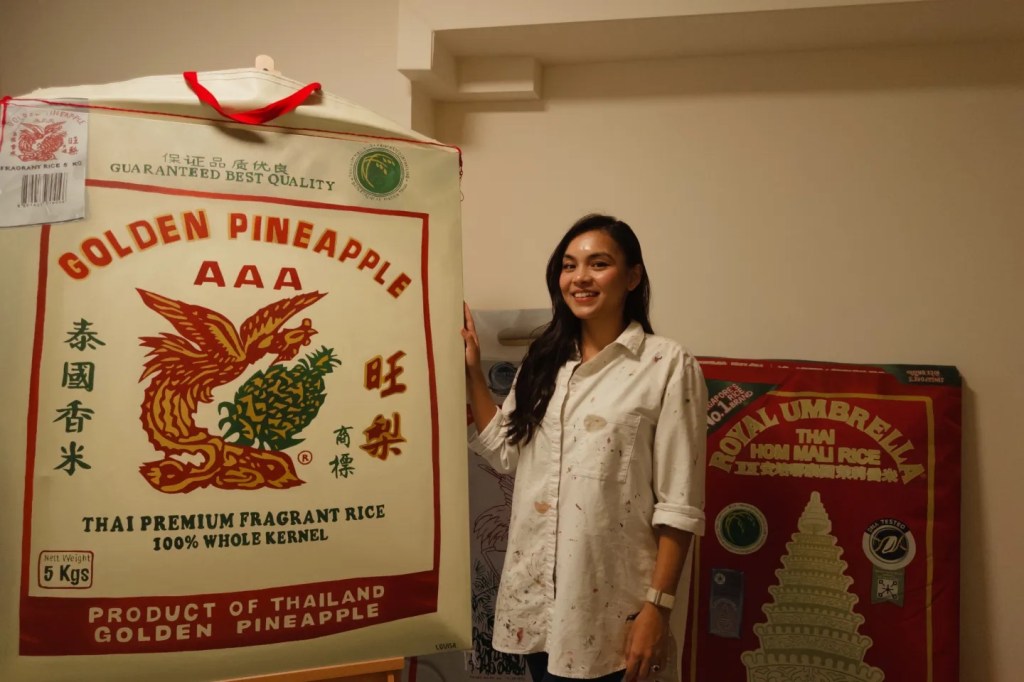
This direction became clearer and more intentional, and it eventually led to the Rice is Nice series. In this series, I painted rice packagings that have remained unchanged for decades, alongside more modern packaging, and brought them together to reflect on food, culture, and everyday life.
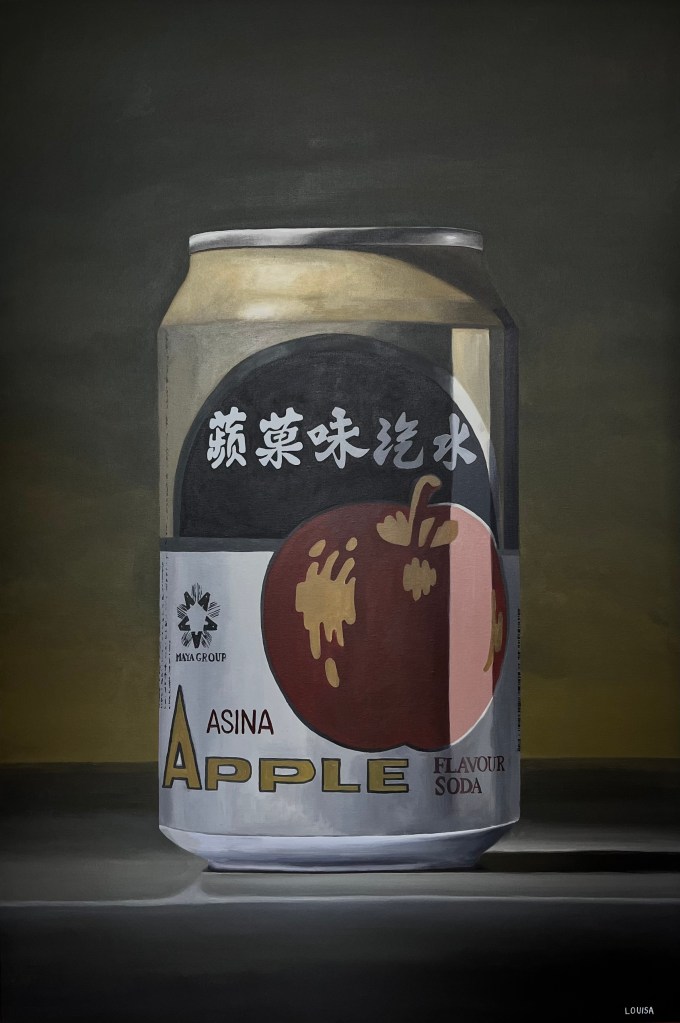
Being an artist often comes with financial uncertainty, particularly in Singapore. How do you navigate and manage this challenge?
Financial uncertainty is something many artists live with, everywhere in the world. I was very aware of that when I made the decision to go full-time, so I made sure that leaving my corporate career was not an impulsive decision. I made sure I had savings that will give me a runway and that there was a healthy demand for my artworks.
I treat my practice like a long-term career, with planning and discipline. Being financially responsible is important to me, especially in Singapore, but I also recognise that it is a privilege to be able to work hard on something of my own choosing. I am learning how to balance both.

If you weren’t pursuing painting, what other form of art do you think you would be practising?
I think I would still be doing something hands-on and creative. I enjoy working with objects and familiar things, and noticing those small details that people instantly recognise.
What has been the highest-priced piece you’ve sold so far, and did it feel like a major milestone when someone acquired your work?
The highest-priced piece I’ve sold so far was $7,500. But for me, the price itself really isn’t the main milestone. What matters more is when someone hangs it in their living space and connects with the story behind it.
I’ve had collectors message me months or even years later to say that they still enjoy looking at the painting every day, and that it reminds them of a certain feeling. Knowing that the work becomes part of someone’s life means a lot to me.
Who or what has been the biggest source of inspiration for your artistic journey?
I don’t think there has been one single source of inspiration. It has always been a combination of people and encounters along the way.
For example, at the very beginning, seeing a painting by Heart Evangelista was what made me want to learn how to paint. I also revisit interviews and works by David Hockney, because I appreciate the way he thinks about painting and the act of looking closely. Over the years, I’ve also found a lot of inspiration from listening to artists talk about their process and philosophy.
The most influential moments for me have come from conversations. That early discussion with the Barbie collector, for example, helped me shape the direction of my work.
I’m inspired by people who are honest with themselves and their work. I find that everyone has an interesting story, and conversations with people continue to shape and inspire my practice.
Can you tell us more about your upcoming debut exhibition at Wasuka Gallery?
Rice is Nice is my debut solo exhibition, opening at Wasuka Art Gallery from 17 January to 15 February. This show features 6 hyper-realistic paintings and 2 sculptures.
The exhibition is really about rice, something so ordinary and deeply embedded in our daily lives that we often overlook it.
In many Asian societies, rice is more than food. It is tied to family, culture, and abundance. By painting these rice packagings in a hyper-realistic way, I hope to draw attention back to it.
I hope people will come by and experience the works in person.
Any last word of wisdom?
I don’t think of this as wisdom, but something that worked for me. If you feel drawn to start or learn something, just do it. You never really know what it might lead to. It could be cooking, writing, gardening, or anything else. It doesn’t even have to be seen by anyone.
You may not know where it’s going at the start, but it usually leads somewhere.
Interview with Louisa Raj by Sophie Medina.
Image courtesy of Louisa Raj.
A Suave Cartel Media orignal series “SPEAKING WITH”.
 suavecartelmedia.com